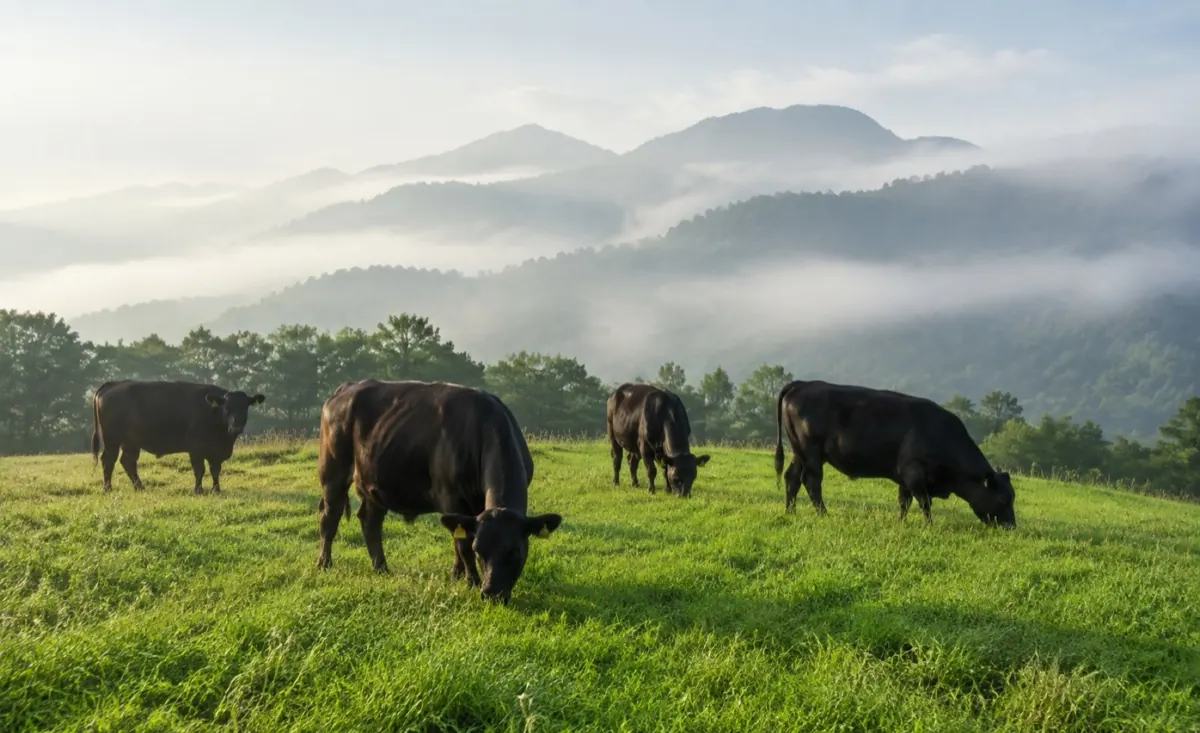
Not every animal may carry the name.
What counts is not where it was born, but where — and for how long — it was raised.
To hold that line, Iga Beef carries a mark.
One mark that guards the name
The Yokozuna of Beef
This is the mark used by the Iga Beef Production Promotion Council.
Yokozuna is the highest rank in sumo. The name once given to Iga Beef became its mark.
The animal is drawn wearing a ceremonial apron — the dress of that rank.
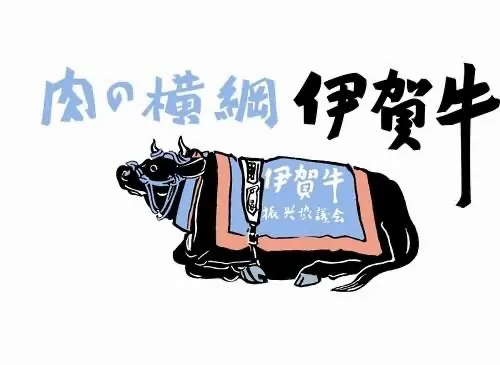
The mark belongs to the Iga Beef Production Promotion Council. This site is not operated by the Council.
What may be called Iga Beef
The Council defines Iga Beef as follows.
If any one of the four is missing, it is not Iga Beef.
- Breed
- Japanese Black (Kuroge Washu) — the breed behind almost all premium wagyu
- Animal
- A heifer that has never calved. Females only
- Raised by
- A member of the Council
- Where and how long
- Its final and longest period of rearing — at least 12 months — within Iga
Birthplace is not part of the definition. What matters is that the animal spent its longest and final period in Iga.
Roughly 1,200–1,300 head a year. About 80% of it is sold through shops certified by the Council.
Where the mark stands
About 80% of Iga Beef reaches people through shops certified by the Council.
The mark shows that the meat came by that route.
If you meet the name outside the region, ask which route the meat travelled.
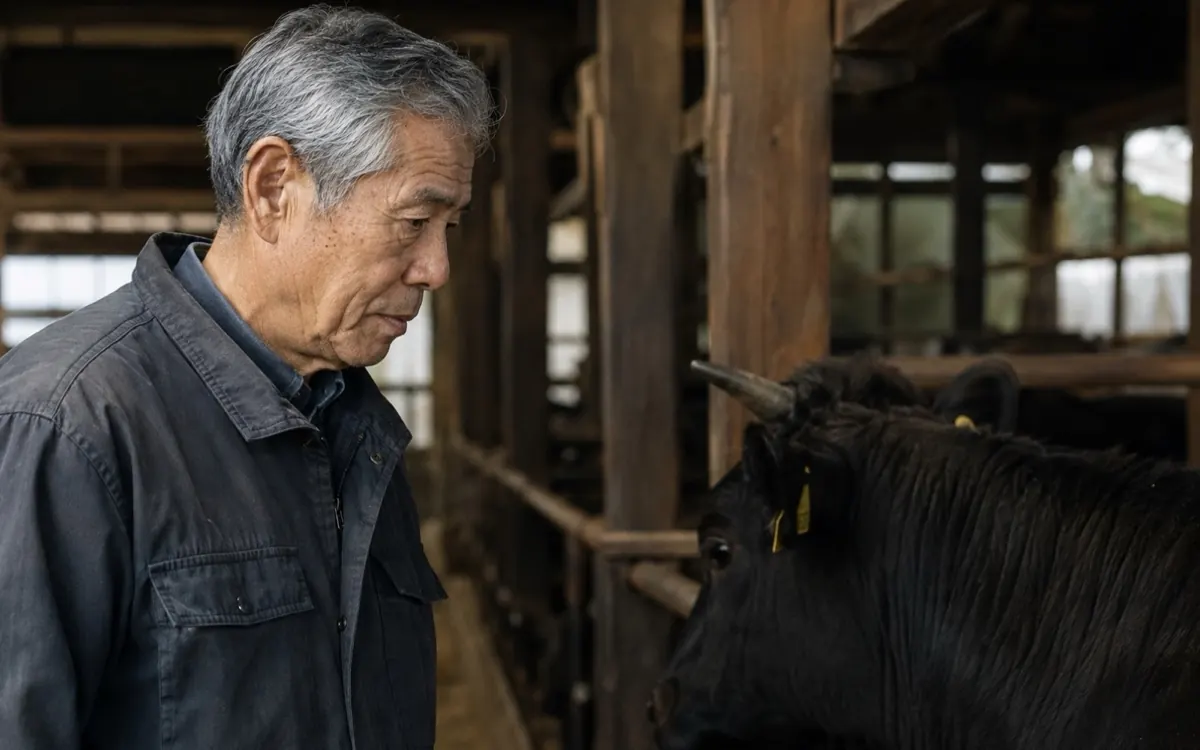
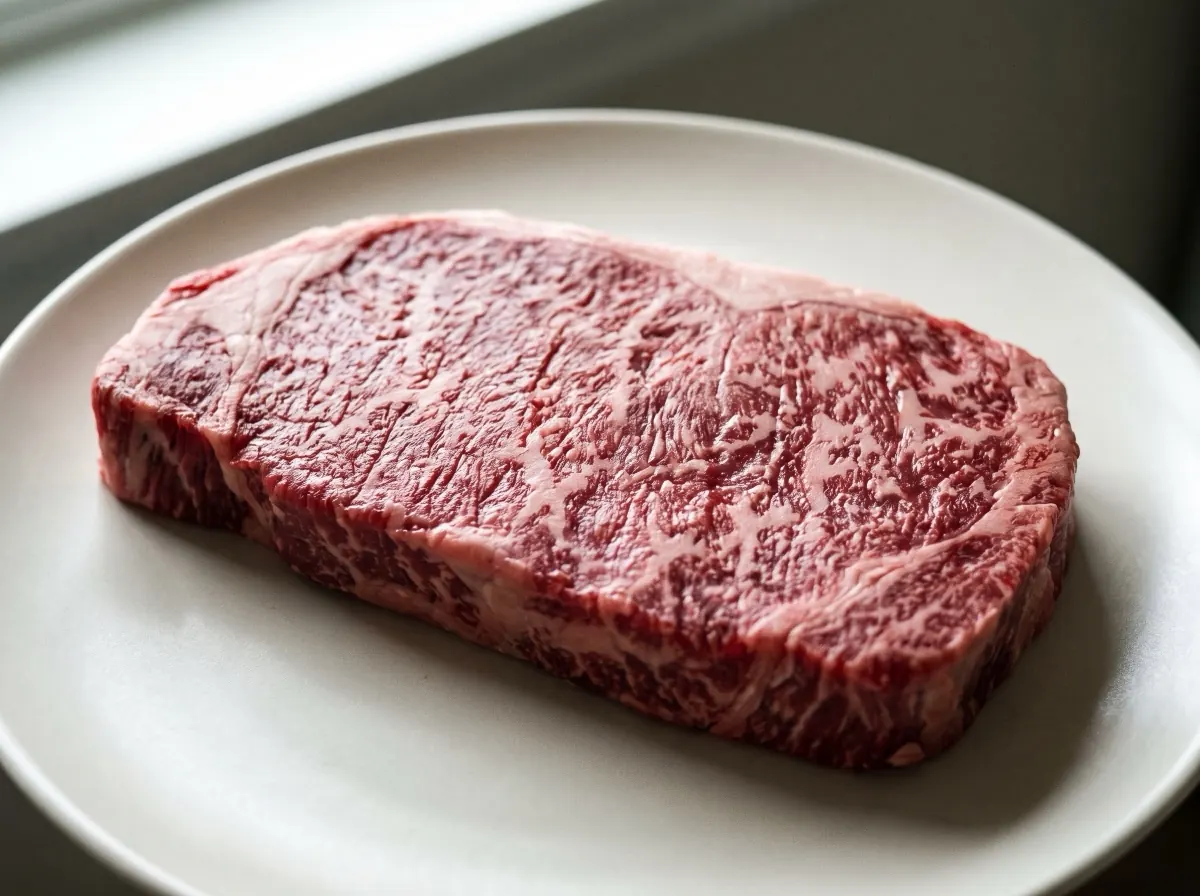
On sourcing the real thing
For those considering handling Iga Beef, we will explain the route the meat takes.
We will listen at the source and propose in keeping with the Iga way.